Fluvsies Care: Princess
TutoTOONSEducational
4.211.00 Reviews
- Version
- 1.0.51
- Installs
- 100.00K
- Age Rating
- Everyone
Screenshots
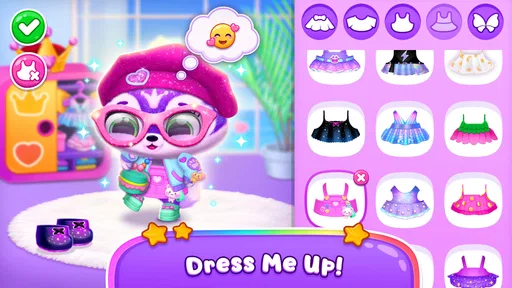
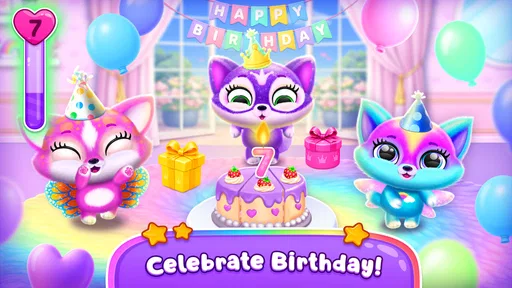
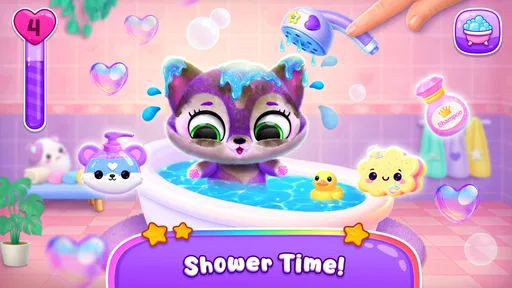
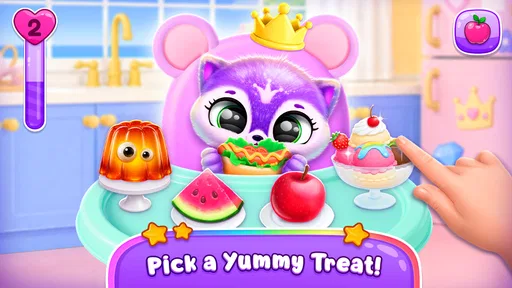
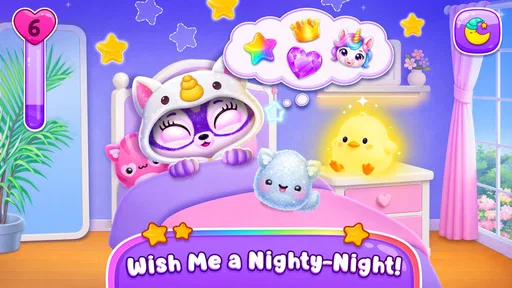
Our Review of Fluvsies Care: Princess
 Analysis by Appyee
I spent time with Fluvsies Care: Princess, a gentle educational game from TutoTOONS built around looking after a fluffy princess pet. Its central appeal is easy to understand: you hatch a cute companion, feed it, and keep it cared for through simple interactions. That makes it a natural fit for younger players who enjoy nurturing games more than fast action or complicated rules.
What makes this particular title worth considering is its approachable scale. It does not present itself as a demanding strategy game or a lesson-heavy school tool. Instead, it turns basic care routines into a playful experience. In my view, that balance is its strongest quality: children can engage with the pet without needing to read long instructions or master difficult controls, while adults can use it as a calm, supervised activity.
The game is free to download, which makes trying the opening experience straightforward. It also includes optional in-app purchases ranging from $0.99 to $119.99 per item, so the free entry point should not be confused with a completely purchase-free experience. I would install it first, explore what is available without spending, and only then decide whether its extra content is worthwhile for the child using it.
How the princess-pet experience works in everyday play
I find the princess-pet routine easiest to assess by watching what a child can work out without an adult explaining every step. The clear focus on hatching and care gives a first session a natural starting point, while a parent can help turn actions into a simple sequence: notice, choose, and care. That also makes it worth considering how the game feels for different reading, movement, and sensory needs.
A simple care loop that younger players can understand
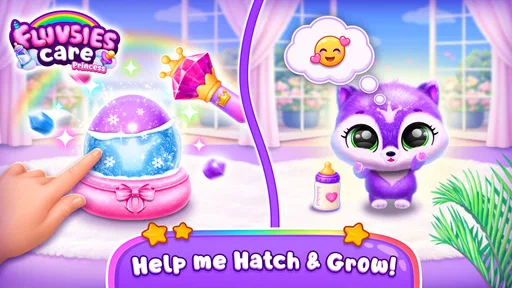
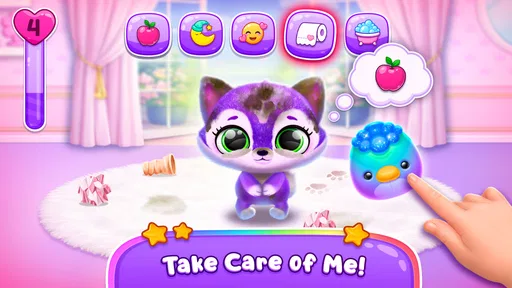
The main loop is based on the familiar rhythm of caring for a virtual animal. The player begins with the excitement of hatching a fluffy friend, then moves into everyday attention such as feeding and looking after it. That sequence gives the game a clear purpose without overwhelming the player with a large map, complicated menus, or a long chain of objectives.
I found that this kind of structure works best in short sessions. A child can open the game, check the pet, complete a few care actions, and leave without needing to remember a complicated mission. That is useful on a tablet shared with siblings or during a quiet period at home. It also makes the game easier for a parent to understand at a glance.
The princess theme adds a distinct identity rather than making the experience feel like an ordinary pet simulator. The fluffy character and hatching premise are likely to appeal to children who enjoy pretend play, dolls, animals, and gentle fantasy settings. The result is more about attachment and routine than competition.
Why the educational label matters, and where it has limits
Fluvsies Care: Princess is categorized as an educational game, but I would describe its learning value carefully. Its strongest contribution is informal learning through responsibility, sequence, and observation. A child can begin to connect actions with care: the pet needs attention, the player responds, and the virtual companion remains part of an ongoing routine.
That is different from a dedicated reading, mathematics, spelling, or science app. If your goal is direct academic practice, this would not replace a focused learning tool. Its educational quality comes through play and repetition rather than lessons with measurable exercises. That distinction matters when choosing it for a child.
For younger players, the value may be emotional and practical rather than academic. Caring for a digital pet can encourage patience and help a child practice following a small sequence of tasks. I would present it as a playful responsibility exercise, not as a complete educational curriculum.
What I would do during a first session
On a first visit, I would let the child explore the hatching moment without immediately explaining every possible action. The appeal depends partly on discovery, and the basic care loop is simple enough to learn through guided trial. After that, I would ask the child to describe what the pet needs and why, turning the game into a small conversation rather than leaving it as passive screen time.
A useful routine is to set a clear stopping point before opening the game. For example, the child can finish caring for the pet and then put the device away. This prevents the experience from becoming an endless request to continue. It also reinforces the idea that the game is a short care activity, not a replacement for sleep, outdoor play, or interaction with real pets.
Another practical tip is to keep purchases out of the first session. Since the game is free to start but contains paid items, I would allow the child to learn the basic experience before discussing extras. This gives the family a much clearer sense of whether the free content already provides enough enjoyment.
Value for families looking for calm screen time
The game’s strongest use case is a child who enjoys gentle, character-focused play and benefits from a predictable activity. It may work well during a short waiting period, on a quiet afternoon, or as part of a supervised tablet routine. The absence of a need for quick reflexes makes it more accessible than action games for children who prefer slower play.
It can also be a useful conversation starter between an adult and child. Asking what the princess pet needs, what the child wants to do next, or how the pet should be cared for gives the adult a way to participate without taking over. That shared involvement adds more value than simply handing over the device.
Still, I would not assume that every child will stay interested. Children who want racing, building, competitive challenges, or constant novelty may find the care-focused format too quiet. The same simplicity that makes it approachable can make it feel limited to players who expect a deeper game system.
How it compares with ordinary alternatives
Compared with a traditional virtual-pet game, this title places more emphasis on the princess character and the hatching fantasy. Compared with a structured educational app, it offers less direct academic training but may feel more inviting to a child who resists worksheet-style activities. Compared with a cartoon video, it gives the child something to do rather than only something to watch.
That middle position is important. It is interactive enough to encourage small decisions, but it is not the right substitute for a full learning program. It is also more participatory than passive entertainment, yet it still needs adult boundaries if the child tends to keep asking for more screen time or optional purchases.
I would choose it over a more intense game when the priority is a cheerful, low-pressure pet experience. I would choose a dedicated learning app when the priority is reading progress, number practice, or a specific school skill. The best option depends on whether the family wants nurturing play or measurable academic instruction.
Free access and the question of paid value
The free price is the clearest reason to give the game a trial. A family can see whether the child connects with the fluffy princess pet before committing money. That lowers the risk of downloading it, especially when the intended player is young and preferences can change quickly.
Paid value requires more judgment. The available purchase range begins at $0.99 and reaches $119.99 per item, which is a wide spread. I would not treat every optional item as automatically good value. The sensible approach is to decide what the child actually enjoys in the free experience and then consider whether a particular purchase adds meaningful play rather than simply encouraging another brief burst of excitement.
Because the game is aimed at Everyone, adults should still handle purchase decisions. An age rating describes the intended audience, but it does not remove the need for household rules. I would use device-level purchase protections, agree on a spending policy, and make sure the child understands that free access does not mean every item inside the game is free.
The most honest value assessment is therefore conditional. The free starting point is attractive for testing the game. Paid value may suit families who already know the child enjoys this style of play, but I would avoid spending before seeing sustained interest. For a child who loses interest after a few minutes, even a small purchase may not improve the experience.
Tradeoffs that are easy to miss
The first tradeoff is simplicity versus depth. The care loop is friendly because it is easy to grasp, but that also means experienced players may run out of things that feel fresh. I would recommend it for short, repeatable visits rather than expecting the depth of a large simulation game.
The second is independence versus supervision. A child may be able to perform the basic pet-care actions alone, which is convenient, but purchase prompts or requests for extras can still require an adult. The game is suitable for independent play in small doses, not necessarily for unrestricted device use.
The third is emotional appeal versus real-world responsibility. A virtual pet can introduce ideas about routine and care, but it should not be presented as equivalent to caring for a living animal. I would use the game to support a conversation about responsibility, while making clear that digital actions have no real-world consequences for an animal’s health.
A fourth tradeoff is accessibility versus variety. A straightforward interaction style can help younger children enter the game quickly, but players who want puzzles, exploration, or competitive goals may prefer a different educational title. The game’s narrow focus is a strength for the right audience and a weakness for everyone else.
Who is most likely to enjoy it
I think the best audience is a younger child who likes cute characters, pretend caregiving, and calm repetition. It is especially suitable for families seeking a free way to test a pet-themed game before paying. Children who enjoy checking on a character and completing small care actions are more likely to return than those who need constant action.
It may also suit an adult looking for a shared activity that can be discussed in simple language. Rather than leaving the child alone with the game, the adult can ask the player to explain the care routine, make choices together, and stop after a defined task. That approach gives the game a stronger educational purpose than the software can provide by itself.
I would skip it if the child wants a substantial lesson plan, advanced customization, competitive play, or a long adventure. I would also skip paid extras unless the free experience has already proved that the child returns willingly. There is no reason to spend at the upper end of the purchase range on a game that does not become part of the child’s regular play pattern.
Device details and what they mean in practice
The game requires Android 7.1 or later, so it is compatible with many older Android devices that still meet that requirement. Before installing, I would check the operating system on a child’s tablet rather than assuming that every older device will run it. The current version is 1.0.51, which is useful to know when checking whether the installed copy is up to date.
Its listing shows a 4.2 average from around 245 ratings, along with over 100 thousand installs. Those figures suggest that it has found an audience, but they should not replace a trial with the particular child who will use it. A child’s reaction to the care loop is more relevant than a general rating when the game is intentionally focused and simple.
The game was released on July 6, 2026, and comes from TutoTOONS. I would keep the developer name in mind when looking at the wider catalog, because families who like this style may want to compare other character-led games from the same creator rather than assuming every title offers the same type of play.
My final recommendation
My recommendation is to try Fluvsies Care: Princess when you want a gentle, free-to-start educational game centered on a fluffy princess pet. Its strongest qualities are its clear care routine, approachable theme, and ability to turn a few minutes of play into a small conversation about attention and responsibility.
I would not call it a complete learning solution or a deep simulation. Its value depends on whether the child enjoys repeating simple care actions, and the presence of optional purchases means adults should stay involved in spending decisions. Those are not deal-breakers, but they are important boundaries.
For the right child, the free entry point makes the decision easy: install it, explore the basic experience, and see whether the pet creates genuine interest. If it does, the game can become a pleasant part of a supervised routine. If the child quickly asks for more complexity or loses interest, I would save the money and choose a more specialized educational game instead. My bottom line is simple: try it for the nurturing play, but judge its paid value only after the free experience has earned a regular place in your child’s day.
Verdict
Strengths of Fluvsies Care: Princess
- Gentle activities are suitable for younger children.
- Cute princess-themed characters encourage imaginative play.
- Simple controls are easy for small hands to understand.
- Short activities work well for quick play sessions.
- Soft visuals create a friendly, non-threatening atmosphere.
Limitations of Fluvsies Care: Princess
- Some content may feel repetitive after extended play.
- Several features require in-app purchases to unlock.
- The game can take considerable storage space on some devices.
- Frequent prompts may encourage children to request purchases.
- Gameplay offers limited challenge for older children.
Other Releases by TutoTOONS
View All
Fluvsies - A Fluff to Luv
Educational4.1

Sweet Baby Girl Cleanup 5
Educational3.8

Smolsies - My Cute Pet House
Educational4.1

Bunnsies - Happy Pet World
Educational4.0
Similar Picks in This Category
View All
Little Panda Policeman
BabyBus4.0

Monster Trucks Game for Kids 2
Raz Games4.1

Little Panda's Chinese Recipes
BabyBus4.4

Little Panda's Restaurant
BabyBus4.4

Little Panda's Ice Cream Games
BabyBus4.3

Baby Panda Care
BabyBus3.8
Frequently Asked Questions
What is Fluvsies Care: Princess about?
Fluvsies Care: Princess is a virtual pet and dress-up game focused on looking after adorable princess-themed Fluvsies. Players can feed, bathe, comfort, entertain, and care for the characters while exploring colorful rooms and activities. The game is designed primarily for children, with simple touch controls, bright visuals, and short interactive tasks that make it easy to understand without requiring previous gaming experience.
Is Fluvsies Care: Princess suitable for children?
The game is generally suitable for young children because its activities are simple, friendly, and centered on nurturing cute characters rather than competition or combat. Children can practice basic responsibility by completing care tasks and following visual prompts. However, parents should still review the app’s age rating, privacy information, advertisements, and available purchases, since the exact experience may vary depending on the device and current version.
Does Fluvsies Care: Princess require an internet connection?
Many of the main care and play activities can usually be accessed without a constant internet connection after the game has been installed. Nevertheless, an internet connection may be needed for downloading the app, receiving updates, displaying certain advertisements, restoring purchases, or accessing optional online features. If you plan to let a child play offline, it is a good idea to test the installed version first.
Is Fluvsies Care: Princess free to download and play?
Fluvsies Care: Princess can generally be downloaded for free, but free access may include advertisements, optional purchases, or content that becomes available through in-game progression. Some items, costumes, activities, or convenience features may require payment. Parents should check the store listing and configure purchase restrictions before handing the device to a child, especially if a shared payment method is connected.
What can players do in Fluvsies Care: Princess?
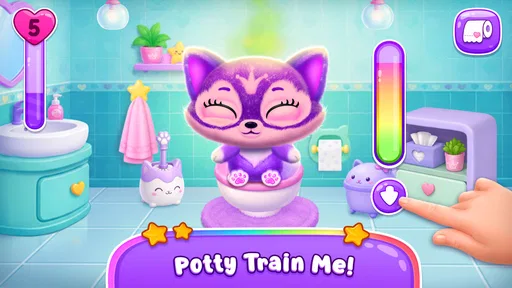
Players can interact with the Fluvsies by completing everyday care routines and playful activities. Depending on the available content, this may include feeding them, keeping them clean, helping them rest, playing mini-games, and choosing princess-inspired outfits or accessories. The appeal comes from repeated nurturing and customization rather than a complex storyline, making it a relaxed game for short sessions and younger players.
Play our best games!


